
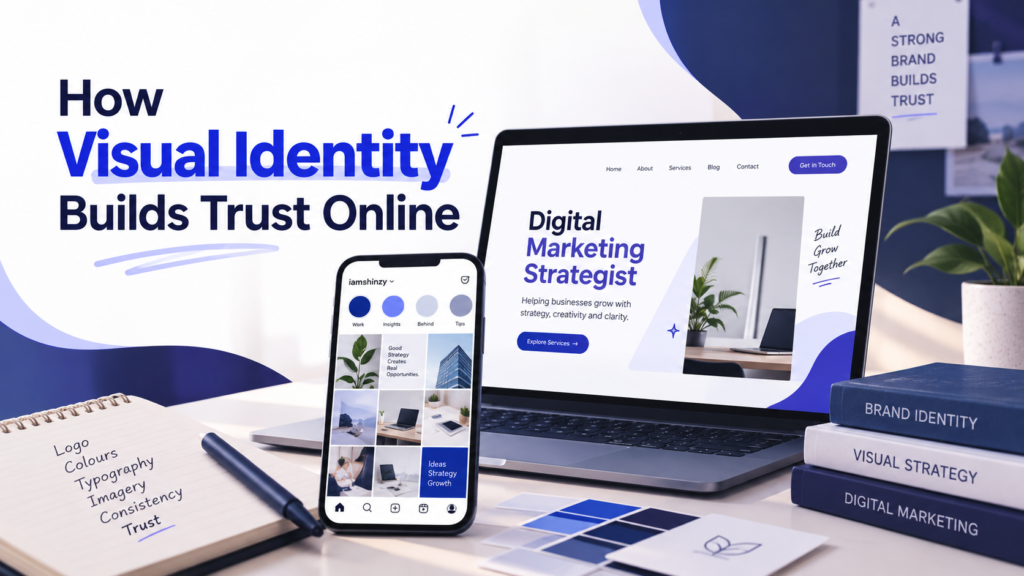
How Visual Identity Builds Trust Online

Imagine visiting two websites that offer the same service. One has a consistent colour palette, clear typography, professional images, and an organised layout. The other uses mismatched colours, inconsistent fonts, and outdated visuals.
Which one would you trust?
Your decision may happen before you even read the content. This is the power of visual identity in building online trust. In a competitive digital environment, how a business presents itself can influence how customers perceive its credibility, professionalism, and reliability.
For businesses looking to strengthen their online presence, visual identity is more than a design choice. It is an essential part of building a recognisable and trustworthy brand.
What Is Visual Identity?
Visual identity refers to the visual elements that represent a brand and make it recognisable. It includes the logo, colours, typography, imagery, graphic elements, and overall design style used across digital and physical platforms.
A strong visual identity communicates a brand’s personality and values without requiring lengthy explanations.
For example, a technology company might use clean layouts, simple typography, and a modern colour palette to communicate innovation. A handmade skincare brand might use natural colours and soft imagery to highlight its connection with nature.
The goal is not simply to make a brand look attractive. It is to ensure that its appearance reflects what the business stands for.
Why Does Visual Identity Matter for Online Trust?
When customers discover a business online, they often have limited information to evaluate it. Its website, social media profiles, advertisements, and other digital content become important sources of their first impressions.
A consistent visual identity helps create a positive impression and makes the brand easier to recognise.
Research published in the Journal of Indian Business Research found that consistent corporate visual identity on social media positively influenced users’ attitudes towards organisations, including their perceptions of credibility and reputation. This highlights the importance of visual consistency in shaping how audiences perceive a brand.
Here are five ways visual identity helps build online trust.
1. Creates a Strong First Impression
First impressions influence whether visitors continue exploring a website or leave without taking action.
A professional design, readable typography, high-quality images, and clear navigation help visitors understand a business and its offerings. Conversely, cluttered layouts, broken visual elements, and inconsistent branding can create uncertainty.
This does not mean every business needs an expensive website or an elaborate logo. A simple, well-organised design that communicates the brand’s purpose clearly can be more effective than an overly complicated one.
The key is to make your brand look clear, professional, and easy to understand.
2. Builds Recognition Through Consistency
Imagine seeing a brand’s blue colour palette and distinctive typography on Instagram, then encountering the same visual style on its website. You are more likely to recognise that both belong to the same business.
This is why brand consistency matters.
Using the same logo, colour palette, typography, and imagery style across different platforms creates a unified experience. Over time, these repeated visual elements help customers become familiar with the brand.
Consistency does not mean every post or page must look identical. It means maintaining a recognisable visual style while adapting content to different platforms and purposes.
When customers can recognise your brand easily, every interaction becomes an opportunity to strengthen familiarity and trust.
3. Communicates Professionalism and Credibility
Customers often use visible details to evaluate a business before making a purchase or contacting its team.
A well-designed website, consistent social media graphics, and clear product images can suggest that a business pays attention to quality and presentation.
However, professionalism is not about following every design trend. It is about choosing visual elements that suit the brand’s audience, industry, and values.
For example, a financial consulting business may benefit from a structured layout and restrained colour palette, while a creative agency might use expressive typography and bold graphics.
When visual presentation aligns with the brand’s purpose, it becomes easier for customers to understand its positioning and take it seriously.
4. Creates an Emotional Connection
Visual identity can influence how people feel about a brand.
Colours, typography, photography, and illustrations contribute to the mood and personality a business communicates. These elements can make a brand feel friendly, sophisticated, energetic, traditional, or innovative.
Consider a local café that uses warm colours, authentic photographs of its space, and consistent designs across its website and social media. These visuals can help communicate the experience customers might expect when they visit.
The emotional connection becomes stronger when the visual identity reflects the actual experience the business delivers.
Trust grows when a brand’s appearance, message, and customer experience support one another.
5. Supports Better Customer Decisions
Online customers often compare several businesses before deciding which one to choose. A confusing or inconsistent presentation can make this process more difficult.
A clear visual identity helps visitors identify important information, understand the services offered, and navigate the website more comfortably.
For example, consistent service icons, readable headings, clear calls to action, and a familiar colour scheme can make it easier for visitors to find what they need.
Good visual design should therefore support usability, not just appearance.
When customers can understand a brand and interact with it easily, they have fewer reasons to hesitate.
Essential Elements of a Trustworthy Visual Identity
Building a trustworthy visual identity starts with a few fundamental elements.
Logo:Create a recognisable logo that represents your brand and works across different digital platforms.
Colour palette: Choose a limited set of colours that reflects your brand personality. Use them consistently across your website, social media, and marketing materials.
Typography: Select readable fonts and establish a clear hierarchy for headings, subheadings, and body text.
Imagery:Use relevant, high-quality photographs, illustrations, and graphics that support your message. Authentic visuals can help your business feel more credible.
Layout and design: Maintain consistent spacing, alignment, navigation, and visual hierarchy to create a comfortable browsing experience.
Brand guidelines:Document your colours, fonts, logo variations, imagery style, and design rules. This helps maintain consistency as your business grows.
Together, these elements create a visual system that customers can recognise and associate with your business.
How to Build a Consistent Visual Identity Online
You do not need to redesign everything at once. Start by reviewing your existing digital presence and identifying areas that need improvement.
Step 1: Define your brand personality. Identify your target audience, brand values, and the impression you want to create.
Step 2: Establish your visual elements. Choose your logo, colours, typography, and imagery style based on your brand positioning.
Step 3: Review your digital platforms.Check your website, social media profiles, email templates, and advertisements for visual inconsistencies.
Step 4: Create reusable templates. Develop templates for social media posts, promotional graphics, and other recurring content to maintain consistency.
Step 5: Prioritise user experience. Ensure your website is mobile-friendly, easy to navigate, and accessible to your audience.
Step 6: Review and improve regularly. Update outdated visuals when necessary, but avoid changing your entire visual identity simply to follow temporary trends.
Remember that consistency should make your brand more recognisable, not prevent it from evolving.
Common Visual Branding Mistakes to Avoid
Even businesses with good products and services can weaken their online credibility through avoidable design mistakes.
Some common examples include:
* Changing brand colours and fonts frequently without a clear reason.
* Using low-quality, irrelevant, or misleading images.
* Overloading websites and social media graphics with unnecessary elements.
* Following design trends that do not match the brand’s personality.
* Creating a visually attractive website that is difficult to navigate.
* Using different branding styles across the website and social media profiles.
* Relying entirely on design while neglecting customer service, reviews, and transparent communication.
A trustworthy visual identity requires a balance between aesthetics, consistency, usability, and authenticity.
Most importantly, visual branding should support the quality and reliability of the business rather than make promises the business cannot deliver.
Conclusion
Visual identity plays an important role in shaping how customers perceive a brand online. From the first impression to repeated interactions, consistent colours, typography, imagery, and design help businesses become more recognisable and communicate professionalism.
However, a strong visual identity is only the beginning. Lasting trust also depends on delivering quality products or services, communicating honestly, protecting customer information, and providing a reliable customer experience.
For businesses looking to strengthen their digital presence, the goal is not simply to look professional. It is to create a recognisable identity that reflects their values and gives customers confidence in what they offer.
Because online trust begins with what people see, but it lasts because of what they experience.